Articles

Level 3 Diploma in Teaching Pilates – Pilates Career in 2026
If you have a passion for fitness and movement and dream of turning it into a fulfilling career, the Level 3 Diploma in Teaching Pilates

Pilates, a versatile and impactful fitness method, is embraced by individuals of all ages and fitness levels. However, navigating through the different types of Pilates can be confusing, especially when distinguishing between Classical and Contemporary Pilates. In this blog, we will delve into these two major forms, exploring their origins, differences, and how they can benefit you.
Joseph Pilates developed Pilates in the early 20th century as a form of exercise to strengthen the body, improve flexibility, and enhance overall health. Initially termed “Contrology,” Pilates focused on controlled movements to engage the core and stabilize the body. Over time, Pilates evolved, leading to the development of two main branches: Classical Pilates and Contemporary Pilates.
Before diving into Classical versus Contemporary Pilates, it helps to understand the full landscape. There are 8 main types of Pilates, each serving different goals, fitness levels, and physical needs. They are: Classical Pilates, Contemporary Pilates, Mat Pilates, Reformer Pilates, Clinical (Rehabilitation) Pilates, Cadillac (Trapeze Table) Pilates, Chair Pilates, and Tower Pilates.
Here is a quick overview of all types of Pilates:
Type of Pilates | Best For | Key Feature |
Classical Pilates | Discipline and tradition | Original Joseph Pilates sequence |
Contemporary Pilates | Rehab and variety | Modern biomechanics integration |
Mat Pilates | Beginners and home practice | Bodyweight on a floor mat |
Reformer Pilates | Intermediate to advanced | Spring-resistance sliding machine |
Clinical / Rehab Pilates | Injury recovery | Led by a certified rehabilitation specialist |
Cadillac / Trapeze Table | Advanced and rehab | Overhead bars, springs, straps |
Chair (Wunda Chair) Pilates | Balance and stability | Compact pedal-based apparatus |
| Tower Pilates | Beginners and older adults | Vertical frame with spring attachments |
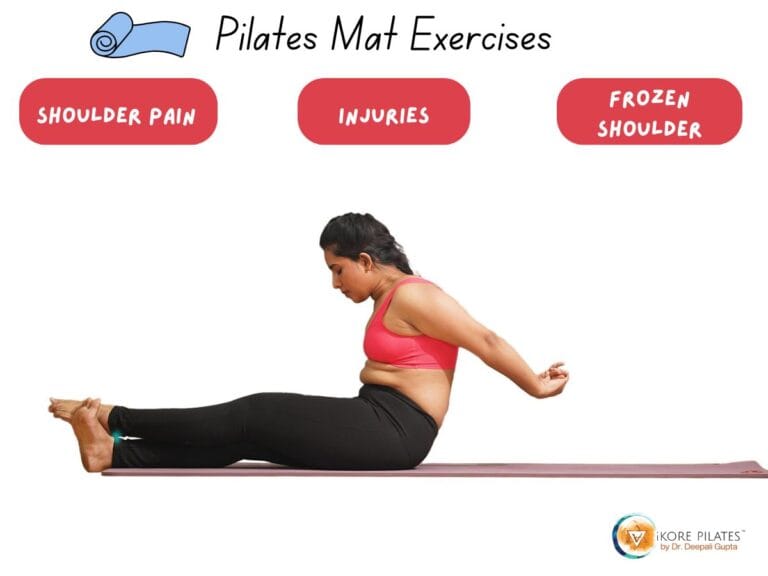
Mat Pilates is the foundation of all Pilates practice. Performed on a floor mat using body weight for resistance, it is the most accessible form of Pilates and requires no specialized equipment. A typical session moves through a flowing sequence that targets the core muscles, lower back, hips, and glutes. Mat Pilates is ideal for beginners, for people practising at home, and as the starting point before progressing to equipment-based classes.
Reformer Pilates uses a sliding carriage mounted on a spring-resistance frame with straps and pulleys. The adjustable springs allow practitioners to customize resistance, making it suitable for both beginners and advanced students. Common exercises include footwork, leg circles, and the Hundred. The Reformer enables movement in all planes, working every joint and muscle group comprehensively. It is the most widely used piece of classic Pilates apparatus across studios worldwide.
Clinical Pilates is a rehabilitation-focused method conducted under the guidance of a certified instructor trained in working with physical limitations. Sessions are built around the individual’s injury, surgery recovery, or chronic condition. Equipment such as the Reformer, Cadillac, and mat are all used to support healing while rebuilding strength, flexibility, and stability. Clinical Pilates is particularly effective for musculoskeletal injuries, post-surgical recovery, chronic lower back pain, and neurological conditions.
The Cadillac is a large, bed-like frame fitted with overhead bars, springs, straps, and a push-through bar. It allows exercises in lying, seated, standing, and even suspended positions. Because it offers both resistance and full-body support, it is excellent for rehabilitation as well as for advanced practitioners seeking variety and challenge.
Chair Pilates uses a compact platform with a spring-loaded pedal. Exercises like leg presses, step-ups, and pikes challenge core stability, balance, and coordination. The chair is particularly beneficial for older adults and anyone working on functional movement and confidence in their body.
The Tower is a vertical frame fitted with a push-through bar, roll-down bar, and arm springs. It offers a blend of support and challenge, making it well-suited for beginners who need additional stability, individuals in rehabilitation, and older adults seeking a safe, progressive workout.
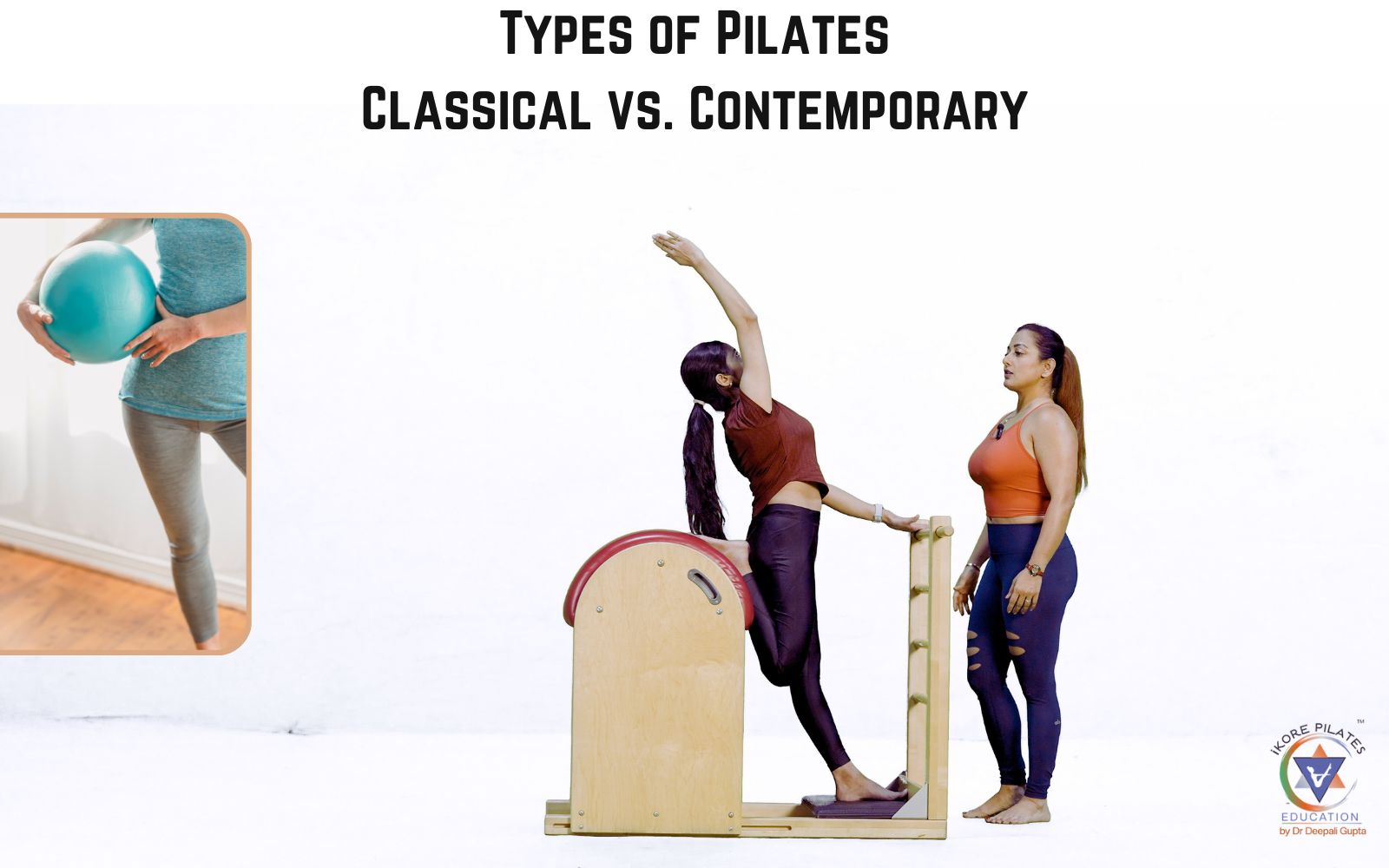
Classical Pilates adheres closely to the original teachings and exercises developed by Joseph Pilates. It emphasizes the traditional sequence of movements and the foundational principles that Pilates himself created.
One of the most distinct differences lies in the types of Pilates equipment used.
Classical Pilates apparatus adheres strictly to Joseph Pilates’ original designs. The Pilates Reformer Machine typically uses leather straps and has a non-adjustable footbar and gear bar. The tension is uniform, forcing the body to find the work within the machine’s rigid structure. You will also see specific dimensions on the Wunda Chair, designed to challenge stability without ergonomic assistance.
When comparing classical pilates vs contemporary pilates, the use of classic pilates equipment is one of the most visible differences. The original apparatus was designed with specific intentions to challenge practitioners to work within fixed parameters and develop strength through consistent resistance.
In contrast, contemporary equipment is often adjustable to fit different body sizes and rehabilitation needs. You will often see:
Contemporary Pilates, on the other hand, adapts and modernizes the original exercises. It incorporates elements from other fitness disciplines and updates the practice to align with current understandings of anatomy and biomechanics.
The contemporary pilates approach has gained popularity among practitioners seeking a more adaptable and personalized practice. Pilates contemporary methods integrate insights from physical therapy, sports science, and biomechanics, making this style particularly appealing to those with specific needs or rehabilitation goals.
Many practitioners find contemporary pilates classes offer greater variety in teaching styles and class formats. This flexibility allows instructors to tailor sessions to different fitness levels and physical conditions, which can be particularly beneficial for beginners or those returning to exercise after injury.
Contemporary Pilates brings a range of advantages that make it one of the fastest-growing forms of movement practice worldwide. Because it draws from physical therapy, sports science, and modern biomechanics, it bridges the gap between exercise and rehabilitation more effectively than many traditional fitness approaches.
One of the most searched comparisons in the Pilates world is the difference between a classical reformer and a contemporary reformer. Understanding this distinction helps practitioners and aspiring instructors make more informed choices.
Feature | Classical Reformer | Contemporary Reformer |
Straps | Traditional leather straps | Rope and loop straps |
Footbar | Fixed, non-adjustable | Adjustable for height and angle |
Springs | All four springs at uniform tension | Multiple spring tensions, varied configurations |
Headrest | Flat or minimal | Ergonomic, adjustable headrest |
Design Goal | Work within a fixed structure | Accommodate varied bodies and rehab needs |
| Best For | Purists and classical method training | Rehabilitation, beginners, and mixed-level classes |
The classical reformer was engineered to create specific challenges: uniform spring tension and leather straps demand that the practitioner’s body find the engagement rather than the machine providing it. The contemporary reformer, by contrast, is designed to support a wider population, including those with injuries, varied body proportions, and different fitness backgrounds.
Whether you choose Classical or Contemporary Pilates depends on your personal preferences, fitness goals, and access to facilities. Here are some factors to consider:
The biggest debate in classical vs contemporary Pilates is often the position of the spine.
This fundamental difference in spinal alignment represents one of the core distinctions when examining classical pilates vs contemporary approaches. The debate around spine positioning reflects broader philosophical differences—classical methods emphasize Joseph Pilates’ original concepts, while contemporary pilates integrates modern understanding of biomechanics and functional movement.
Many students ask about fitness-based variations. Is Power Pilates classical or contemporary? Power Pilates is generally considered a contemporary approach, though it respects the classical order. It speeds up the tempo and transitions to create a cardio effect, diverging from the slow, deliberate pace of the original Contrology method.
If you are interested in diving deeper into these systems, check out our Pilates training courses where we explore the history and application of the Classical Pilates system.
Both Classical and Contemporary Pilates offer significant benefits, from improving core strength and flexibility to promoting balance and overall well-being. At iKore Pilates Studio, we blend the best of both worlds. Our diverse range of classes, whether traditional or modern, ensures that you receive comprehensive training tailored to your unique needs.
When weighing classical pilates vs contemporary pilates for your practice, remember that neither approach is inherently better, the right choice depends on your body’s needs, your personal goals, and what resonates with you. Some practitioners even benefit from experiencing both styles to understand the full range of what Pilates can offer.
iKore Pilates, located in Pune, offers a variety of Pilates training courses, including certification programs for aspiring instructors. Whether you are interested in Pilates for kids, seeking Pilates for belly fat reduction, or aiming to deepen your practice, iKore Pilates provides the expertise and equipment to support your journey.
Explore the world of Pilates with us, where tradition meets innovation, and experience the transformative power of this exceptional fitness method. Whether you prefer the structured approach of Classical Pilates or the dynamic adaptability of Contemporary Pilates, our dedicated team is here to guide you every step of the way.
Visit iKore Pilates Studio today and discover how Pilates can enhance your life, improve your health, and help you achieve your fitness goals.
Unsure which style suits your body best? Come visit us for Pilates classes.
Q. What is the difference between classical and contemporary Pilates?
The main difference is in the approach to spinal alignment and the order of exercises. Classical Pilates follows the exact sequence (order) created by Joseph Pilates and often uses a “flat back” position. Pilates contemporary methods adapt exercises based on modern physical therapy, often favoring a “neutral spine” and modifying movements for injury rehabilitation.
Q. What type of Pilates is the most effective?
It depends on your goal. Classic Pilates equipment and methods are often better for discipline, strict core strength, and learning the historical “system.” Contemporary Pilates is often considered more effective for rehabilitation or specific goals like Pilates for belly fat reduction.
Q. What is the contemporary Pilates method?
The contemporary Pilates method is an evolution of the original work. It integrates modern knowledge of biomechanics and kinesiology. Because it is adaptable, it is the preferred method for our Online Pilates Classes, as it allows instructors to modify movements for students practicing at home.
Q. Is Classical Pilates harder than Contemporary?
Not necessarily harder, but different. Classical Pilates flows quickly with fewer breaks and relies heavily on flow and transitions. Contemporary classes can be just as intense but might focus more on form correction, variety, and holding positions longer.
Q. How many types of Pilates are there?
There are 8 main types of Pilates: Classical, Contemporary, Mat, Reformer, Clinical (Rehabilitation), Cadillac, Chair, and Tower Pilates. Each type serves different goals, fitness levels, and physical needs, from foundational mat work to advanced equipment-based training and injury rehabilitation.
Q. What is the difference between a classical reformer and a contemporary reformer?
A classical reformer uses leather straps, a fixed footbar, and uniform spring tension, challenging the practitioner to work within a rigid structure. A contemporary reformer features rope straps, an adjustable footbar, and varied spring configurations, making it more adaptable to different body types, fitness levels, and rehabilitation needs.
Q. What is traditional Pilates?
Traditional Pilates, also known as Classical Pilates or Contrology, refers to the original method developed by Joseph Pilates in the 1920s. It follows a set sequence of exercises, emphasizes precision and flow, and uses apparatus specifically designed by Joseph Pilates, including the Reformer, Cadillac, and Wunda Chair.
Q. Is Reformer Pilates classical or contemporary?
Reformer Pilates exists in both classical and contemporary forms. Classical Reformer Pilates follows the original Contrology sequence and uses traditional apparatus. Contemporary Reformer Pilates uses modified equipment and adapts exercises based on modern biomechanics, rehabilitation science, and individual client needs.
If you have a passion for fitness and movement and dream of turning it into a fulfilling career, the Level 3 Diploma in Teaching Pilates

Pregnancy brings countless questions about what activities are safe for you and your growing baby. Among the most common concerns is whether Pilates can be