
Picture this: your mornings begin with a gentle stretch, your core feels strong throughout the day, and that nagging backache from sitting at your desk has finally eased. This isn’t a far-fetched dream; it’s what happens when you discover the transformative practice of Pilates.
If you’ve been scrolling through wellness feeds or chatting with friends about fitness, you’ve probably heard whispers about Pilates. But what is a Pilates workout, really? And more importantly, how does it work its magic on your body? Let’s unpack this mindful movement practice that’s been quietly revolutionizing how we approach strength, flexibility, and body awareness.
Understanding Pilates: More Than Just Another Workout
Pilates is a low-impact exercise system that focuses on controlled, precise movements to strengthen your core, improve posture, and enhance flexibility. Unlike traditional workouts that might leave you breathless and sore, Pilates invites you into a conversation with your body, teaching it to move with intention, grace, and power.
Created by Joseph Pilates during World War I, this method was initially designed to rehabilitate injured soldiers. What began as a rehabilitation technique has evolved into a complete wellness practice that bridges the gap between physical fitness and mindful movement.
At its heart, Pilates targets what practitioners call the “powerhouse”, the deep abdominal, pelvic floor, and back muscles that support your spine and hips. Think of these muscles as the foundation of a building; when they’re strong and stable, everything else functions more smoothly.
How Does Pilates Exercise Work for Your Body?
The beauty of Pilates lies in how it teaches your muscles to work together as a coordinated system rather than isolated parts. When you’re doing Pilates exercises, every movement begins from your core and flows outward with control and precision.
Here’s what makes Pilates work differently: instead of focusing on maximum repetitions or heavy weights, it emphasizes the quality of each movement. You might perform an exercise just three to five times, but each repetition is executed with such awareness and control that your muscles receive exactly the challenge they need.
The breathing technique in Pilates is equally crucial. You’ll learn lateral breathing, expanding your rib cage sideways rather than letting your belly puff out. This keeps your core engaged while allowing your lungs to fill, creating an internal support system that stabilizes your spine during movement.
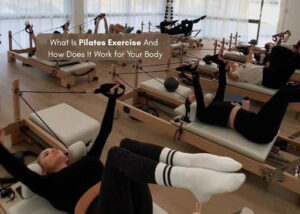
Modern Pilates is practiced in two main forms: mat Pilates, which requires only your body weight and a comfortable mat, and equipment-based Pilates, which uses specialized machines like the Reformer, Cadillac, and Wunda Chair. iKore Pilates, India’s premier Pilates studio, founded by Dr. Deepali Gupta, Asia’s Pilates Ambassador.
Pilates Approaches: Finding Your Perfect Fit
| Aspect | Mat Pilates | Equipment-Based Pilates | Online Pilates (iKore Pilates 3-D) |
| Setting | Floor mat, body weight | Reformer, Cadillac, chairs with spring resistance | Scheduled one-on-one virtual sessions with dual-device setup |
| Best For | Beginners, home practice, building a foundation | Progressive strength, targeted muscle work, and rehabilitation | Personalized guidance from home, real-time corrections |
| Intensity | Moderate, scalable | Adjustable through spring resistance | Customized to your body and goals |
| Focus | Core stability, basic movements | Full-body conditioning, precise alignment | Accountability, professional attention, posture correction |
Understanding how Pilates training helps build mind-body connection can deepen your appreciation for why this practice feels so different from other workouts you might have tried.
Key Benefits: What Pilates Does for Your Body
Builds Deep Core Strength. Unlike traditional ab workouts that target surface muscles, Pilates strengthens the transverse abdominis, the deepest layer of abdominal muscles that acts like a natural corset, stabilizing your spine and improving balance.
Transforms Your Posture. Hours spent hunched over laptops and phones create muscular imbalances that Pilates gently corrects. By strengthening postural muscles and increasing body awareness, you’ll naturally stand taller and move more efficiently. The posture exercises and flexibility work at iKore particularly focus on spinal alignment and core stability.
Enhances Flexibility Without Strain Pilates lengthens and strengthens simultaneously, creating long, lean muscles rather than bulk. The controlled movements improve your range of motion while building strength, making it perfect for anyone with tight hips, hamstrings, or shoulders.
Relieves Back Pain Because Pilates strengthens the muscles supporting your spine and promotes neutral alignment, it’s highly effective for managing chronic back pain. The exercises teach you to distribute pressure evenly and move without strain.
Improves Balance and Coordination. By engaging deep stabilizing muscles and encouraging symmetrical movement, Pilates enhances your proprioception, your sense of where your body is in space. This benefit extends beyond your workout, helping you move more gracefully in daily life.
Getting Started: Your First Pilates Exercises
If you’re wondering how to do Pilates exercise as a beginner, here are foundational movements that form the basis of any Pilates practice:
The Hundred: This classic exercise involves lying on your back with knees bent, lifting your head and shoulders off the mat, and pumping your arms rhythmically while breathing in patterns. It builds core endurance and teaches breath coordination.
Roll-Up: Starting flat on your back with arms overhead, you slowly curl up to a seated position, reaching toward your toes, then roll back down with control. This movement articulates your spine and strengthens your abdominal muscles.
Single-Leg Stretch: Bringing one knee to your chest while extending the opposite leg, then switching sides fluidly, this exercise targets lower abs and improves coordination.
For those seeking comprehensive guidance, iKore Pilates offers both studio services, including mat classes, equipment group sessions, and private one-on-one training, as well as education programs for those interested in deeper learning.
Essential Tips for Your Pilates Practice
Quality Over Quantity: A few precise repetitions performed with complete control and awareness are infinitely more valuable than rushing through many sloppy movements. Focus on feeling each muscle engage.
Breathe Intentionally. Coordinate your breath with movement, typically inhaling to prepare and exhaling during the exertion phase. This rhythmic breathing enhances core activation and prevents unnecessary tension.
Maintain Neutral Spine. Instead of pressing your lower back flat into the mat, maintain its natural curve while engaging your core. This protects your spine and ensures proper muscle activation.
Start Small, Progress Gradually. Begin with basic mat exercises for 10-15 minutes daily. As your body adapts, you can increase complexity and duration. Consistency matters more than intensity when you’re building foundational strength.
Seek Proper Guidance. While Pilates might look gentle, proper form is crucial for effectiveness and injury prevention. Working with a certified instructor ensures you’re performing movements correctly. Dr. Deepali Gupta’s expertise as a Master Educator and Balanced Body certified professional means you’re learning from internationally recognized standards at iKore Pilates.
Does Pilates Count as Exercise?
Absolutely. While Pilates might not leave you drenched in sweat like a cardio session, it’s a comprehensive workout that builds strength, improves flexibility, and enhances body awareness. The controlled resistance used in Pilates exercises, whether through body weight, springs, or props, strengthens and tones your entire body without stressing your joints.
For those with specific wellness goals, Pilates adapts beautifully. Whether you’re recovering from injury through Rehab Pilates sessions, seeking to improve athletic performance, or simply wanting to move through your day with less pain and more grace, this versatile practice meets you where you are.
The iKore approach emphasizes personalized fitness through deep anatomical understanding and tailored classes. With locations in Aundh and Hinjewadi, Pune, and the innovative Pilates 3-D online program offering scheduled one-on-one sessions with real-time corrections, accessible Pilates training has never been more convenient.
Your Journey Begins Here
Starting a Pilates practice is like learning a new language for your body. At first, the precise movements and focused breathing might feel unfamiliar, but with consistent practice, you’ll discover a strength and awareness you didn’t know you possessed.
Whether you choose mat work at home, equipment-based sessions at a studio, or virtual training with personalized attention, the principles remain the same: controlled movement, core engagement, mindful breathing, and quality over quantity.
For those curious about pursuing Pilates more seriously, exploring the best Pilates certification courses in India might open unexpected doors. What begins as personal practice often transforms into a passion for helping others discover the same benefits.
Frequently Asked Questions
Q. Is Pilates suitable for complete beginners?
Ans. Yes, Pilates was designed to be progressive and accessible. Mat sessions introduce fundamentals like breathing, core activation, and alignment, making it safe and effective for newcomers. Starting with proper guidance ensures you build a strong foundation.
Q. How often should I practice Pilates to see results?
Ans. Consistency matters more than duration. Practicing 3-4 times weekly yields steady improvements in strength, balance, and flexibility. Even 20 minutes daily can deliver noticeable results within a few weeks.
Q. Can Pilates help with weight management?
Ans. While not a high-calorie-burning workout, Pilates builds lean muscle that raises your metabolism. Combined with cardiovascular exercise and mindful nutrition, it supports sustainable wellness and body composition improvements.
Q. What’s the difference between Pilates and yoga?
Ans. Pilates emphasizes core strengthening and functional alignment with controlled, flowing movements. Yoga focuses more on flexibility, breath-based mindfulness, and spiritual elements. Both practices complement each other beautifully and can be integrated for complete fitness.
Q. Do I need special equipment to start Pilates?
Ans. No. A comfortable mat is sufficient to begin. Props like resistance bands or a Pilates ring can be added later for variety, and equipment like the Reformer provides additional resistance options as you progress.