
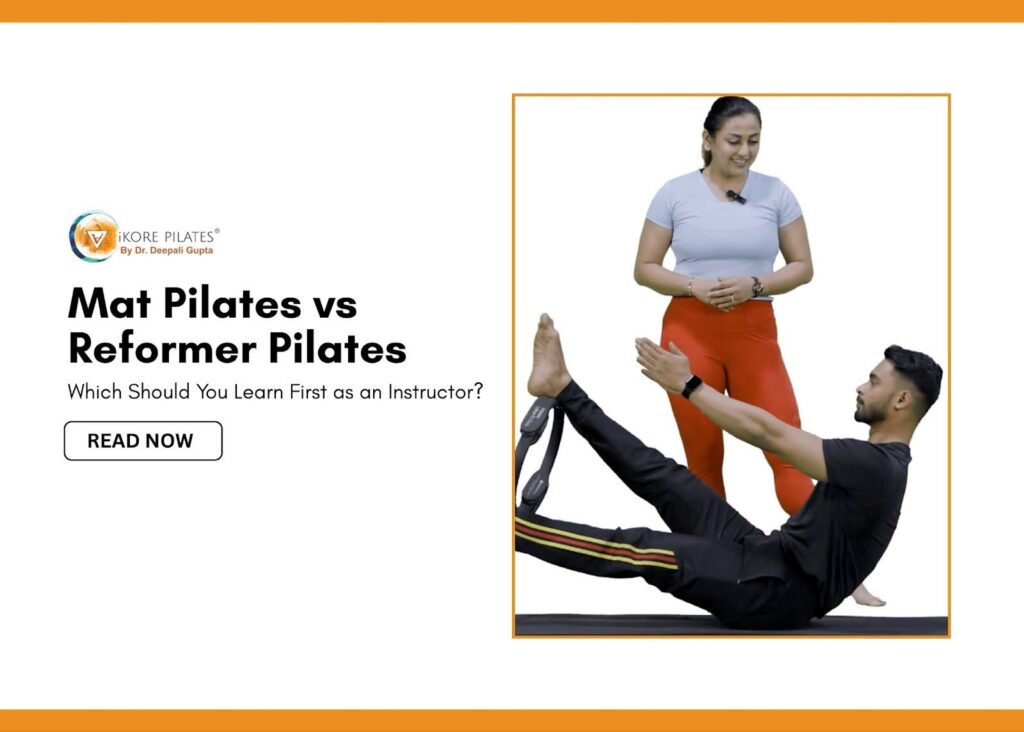
Aspiring Pilates instructors face a critical decision early in their journey: should you start with Mat Pilates certification or dive straight into Reformer Training? The choice you make shapes not only your teaching capabilities but also your understanding of Pilates principles and your career trajectory.
Most successful Pilates instructors will tell you the same thing: start with Mat Pilates. The reasoning goes beyond tradition. Mat work forms the foundation of the entire Pilates method, teaching you movement patterns, alignment principles, and cueing techniques without the assistance of equipment. When you understand how the body moves against gravity alone, you gain insights that make teaching on apparatus far more effective.
Why Mat Pilates Training Comes First
Mat Pilates represents the purest form of the Pilates method. Created by Joseph Pilates himself, these exercises rely entirely on body weight, gravity, and small props like balls, foam rollers, and magic circles. Learning mat work first gives you several distinct advantages as an instructor.
You develop a deeper understanding of movement mechanics. Without springs and pulleys assisting or resisting movement, you learn to observe how bodies actually move. You see compensation patterns more clearly. You understand which muscles should activate and when.
The cueing skills you develop during mat training prove invaluable. When students have no equipment to guide them, your verbal and tactile cues become everything. You learn to communicate clearly about body position, breathing, and muscle engagement. These skills transfer directly to reformer teaching, but the reverse does not work as well.
iKore Pilates Mat 1 certification provides foundation-level exercises, the correct use of props, and helps build the core teaching competencies you need. With a focused and supportive learning environment, you receive personalized attention that accelerates your understanding, confidence, and overall teaching skills.
The Case for Reformer Training
The reformer offers unique teaching opportunities. Springs provide variable resistance and assistance, making exercises more accessible for beginners or more challenging for advanced students. The sliding carriage adds instability that demands core engagement. The footbar, straps, and other attachments create exercise variations impossible on a mat.
Some aspiring instructors argue they want to teach reformer classes because that’s where the money is. Boutique reformer studios charge premium prices, and reformer instructors often earn more per class than mat instructors. The logic seems sound: why not learn the more lucrative skill first?
Without mat training, reformer instructors often lack the fundamental understanding of Pilates principles. You might learn the exercises and spring settings, but you miss the deeper knowledge of how and why movements work. Your teaching remains surface-level, and experienced students notice the difference.
The Ideal Learning Progression
The most effective path combines both modalities in a logical sequence. Here’s the progression that produces the most competent instructors:
Start with Movement Principles. Before diving into specific exercises, you need to understand the foundational concepts. Programs like iKore Pilates Movement Principles certification teach you the core principles that underpin every Pilates exercise. The course covers alignment, breathing, core engagement, and movement patterns. Consider this your Pilates alphabet before you start forming words.
Progress to Mat 1. Once you understand movement principles, mat training makes sense. You apply those principles to classic mat exercises, learning proper form, teaching cues, and modifications. You work with props to add variety and challenge. You practice teaching in small groups, receiving feedback that refines your skills.
Add Reformer Training. With mat certification complete, you’re ready for reformer work. You already understand the exercises conceptually. Now you learn how springs modify the challenge, how the carriage changes the dynamics, and how to use the apparatus creatively. Programs like iKore Pilates Reformer 1 require Movement Principles certification as a prerequisite, ensuring you have the foundation needed.
Continue Comprehensive Training. The journey doesn’t end with basic certifications. Comprehensive teacher training programs deepen your knowledge, add advanced exercises, and often include other apparatus like the Cadillac, chair, and barrel.
Practical Considerations for Your Decision
Your choice also depends on practical factors. Mat certification typically costs less than reformer training because studios don’t need to provide expensive equipment. If budget constraints your decision, starting with mat makes financial sense.
Teaching opportunities differ, too. Some studios hire mat-only instructors for group classes, while reformer positions often require both mat and reformer certifications. Mat skills remain relevant across all teaching contexts, including warm-ups, cooldowns, and modifications.
The time investment varies. Mat certifications usually require fewer contact hours than reformer programs, allowing you to complete training faster and start teaching sooner.
Consider your learning style as well. Some people thrive with the structure that equipment provides, while others prefer the simplicity of mat work. However, remember that your preference as a student might differ from what makes you an effective instructor.
What Successful Instructors Recommend
Dr. Deepali Gupta, founder of iKore Pilates and Asia’s Pilates Ambassador for 2023 and 2024, has trained over 2,000 individuals and certified more than 500 Pilates instructors. Her approach emphasizes foundation-first training. Students begin with Movement Principles, progress through Mat 1 and Mat 2, and only then move to reformer certification.
Instructors trained through foundation-first programs demonstrate stronger teaching skills, better client outcomes, and longer career sustainability. Starting with mat might feel slower initially, but it builds a stable platform for everything that follows.
FAQs
Can I skip mat training and go straight to reformer certification?
While some programs allow this, skipping mat training leaves gaps in your foundation. You might learn reformer exercises, but you’ll miss the deeper understanding of movement principles that makes you an effective instructor. Most respected certification bodies require or strongly recommend mat training first.
How long should I wait between mat and reformer certifications?
Most instructors benefit from 3-6 months of mat teaching experience before adding reformer training. During this time, practice teaching mat classes, refine your cueing, and take reformer classes as a student. When you start reformer certification, you’ll apply lessons learned from teaching experience.
Is mat or reformer certification more valuable for my career?
Both certifications increase your employability, but mat training provides more versatile skills. Many studios require both certifications for reformer teaching positions anyway. Starting with mat gives you a stronger foundation that enhances all future training.
What if my local studio only teaches reformer classes?
Even reformer-focused studios value instructors with mat training. Mat skills help you create better warm-ups, understand modifications, and teach private sessions more effectively. Consider online or intensive programs for mat certification, then add reformer training locally.