
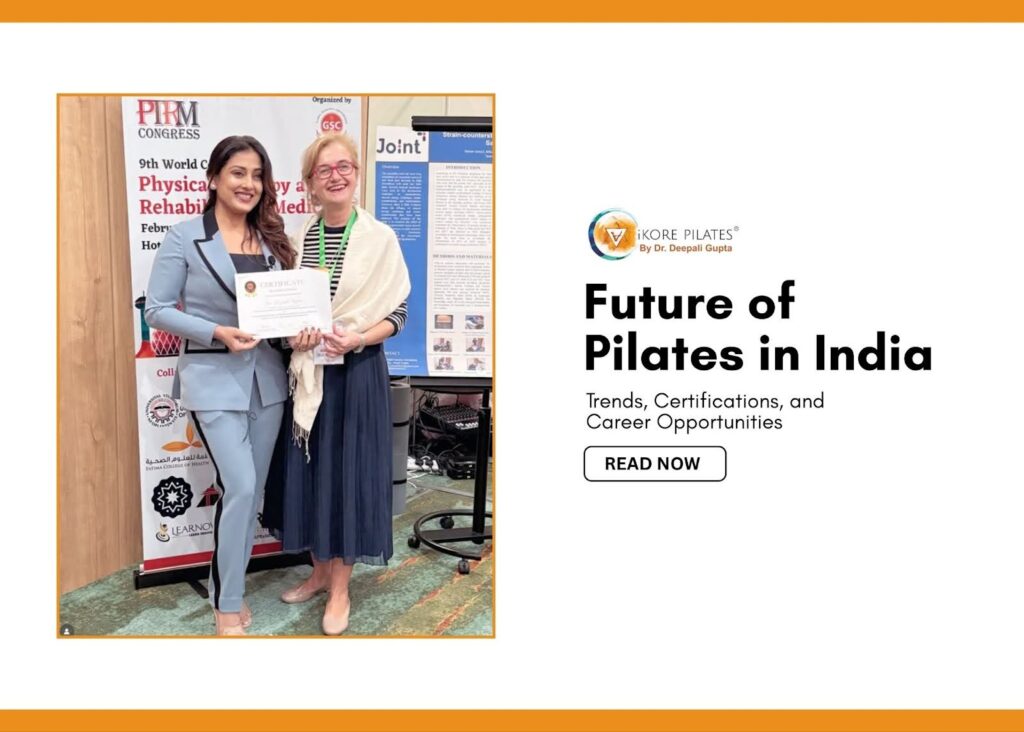
The wellness industry in India is experiencing remarkable growth, and Pilates is at the forefront of one of the most exciting transformations. What was once considered a niche workout for celebrities and fitness enthusiasts has evolved into a mainstream movement practice embraced by people of all ages and fitness levels.
If you’re considering a career in Pilates or wondering about the scope of becoming a certified instructor in India, you’re entering the field at the perfect time. The demand for qualified Pilates professionals is rising rapidly, driven by increased awareness about holistic health, rehabilitation-focused exercise, and preventive wellness.
The Growing Pilates Industry in India
India’s fitness landscape has shifted dramatically over the past decade. According to IHRSA’s Global Report, the Asia-Pacific fitness market is projected to grow significantly, with India being one of the fastest-growing markets in the region.
Several factors contribute to the rising popularity of Pilates in India:
- Increased health awareness: Post-pandemic, people are prioritizing functional fitness and injury prevention over intense workouts.
- Aging population needs: With a growing middle-aged demographic, there’s higher demand for low-impact, joint-friendly exercises.
- Medical recommendation: Physiotherapists and doctors increasingly recommend Pilates for rehabilitation, posture correction, and chronic pain management.
- Corporate wellness programs: Companies are incorporating Pilates into employee wellness initiatives.
- Social media influence: Instagram and YouTube have made Pilates more visible and accessible to younger audiences.
The wellness industry in India is expected to reach significant heights in the coming years, creating abundant opportunities for certified Pilates instructors who can bridge the gap between fitness and healthcare.
Emerging Trends Shaping Pilates in India
Clinical and Rehabilitative Pilates
One of the most significant trends is the integration of Pilates with rehabilitation and therapeutic practices. Movement-based rehabilitation is gaining recognition as an effective treatment for conditions like:
- Lower back pain and spinal issues
- Post-surgical recovery
- Sports injuries
- Postpartum recovery
- Chronic pain conditions
Programs like the Movement Principles course at iKore Pilates focus on foundational movement patterns that help instructors work effectively with clients who have specific health challenges.
Equipment-Based Training
While mat Pilates remains popular, there’s growing interest in equipment-based sessions using reformers, chairs, and barrels. Equipment training allows for greater resistance variation and modified movements, making Pilates accessible to different fitness levels and rehabilitation needs.
Hybrid and Specialized Programs
Modern Pilates studios are offering hybrid classes that combine Pilates with yoga, barre, or functional training. Additionally, specialized programs targeting specific demographics like prenatal Pilates, senior fitness, and athlete conditioning are becoming more common.
Digital and Online Instruction
The pandemic accelerated the adoption of virtual Pilates classes. Many instructors now offer hybrid models, combining in-person sessions with online training, expanding their reach beyond geographical limitations.
Pilates Certification Pathways in India
Becoming a certified Pilates instructor requires proper training from recognized institutions. In India, several pathways exist for aspiring instructors.
Internationally Recognized Certifications
Look for programs that offer internationally recognized credentials, such as:
- NCPT (National Center for Pilates Teacher Training): One of the most respected certifications globally, recognized by studios worldwide.
- Balanced Body Certification: Another internationally acclaimed program that many Indian institutes offer.
- PMA (Pilates Method Alliance): The gold standard for Pilates certification globally.
iKore Pilates, led by Dr. Deepali Gupta, offers comprehensive teacher training programs aligned with international standards, ensuring graduates can work anywhere in the world.
Progressive Learning Structure
Quality certification programs follow a progressive structure:
- Foundation Level: Understanding movement principles, anatomy, and basic biomechanics.
- Mat Pilates: Learning classical and contemporary mat exercises with modifications.
- Equipment Training: Mastering reformer, chair, barrel, and other apparatus work.
- Comprehensive Training: In-depth study combining all elements with teaching methodology.
Specialization Options
After completing foundational certifications, instructors can pursue specializations in:
- Prenatal and postnatal Pilates
- Pilates for rehabilitation
- Sports-specific Pilates conditioning
- Senior fitness programs
- Movement therapy certification
Career Opportunities for Pilates Instructors
The scope for Pilates instructors in India extends far beyond traditional studio teaching.
Studio Employment
Working at established Pilates studios provides steady income and mentorship opportunities. Instructors typically earn between INR 25,000 to INR 80,000 per month, depending on experience, location, and studio reputation.
Private Practice
Many experienced instructors build successful private practices, offering one-on-one sessions at premium rates. Private instructors can charge INR 1,500 to INR 5,000 per session in metropolitan areas.
Corporate Wellness Programs
Companies are hiring Pilates instructors for employee wellness initiatives, offering contract-based opportunities with competitive compensation.
Rehabilitation Centers and Clinics
Collaborating with physiotherapists and healthcare providers opens doors to work in medical settings, helping patients recover from injuries or manage chronic conditions.
Opening Your Own Studio
Entrepreneurial instructors can establish their own studios. While an initial investment is required, successful studios generate substantial revenue and establish you as a leader in your community.
Online Instruction and Content Creation
Building an online presence through virtual classes, YouTube channels, or subscription-based platforms allows instructors to scale their income beyond hourly teaching rates.
Teacher Training
Experienced master trainers can conduct certification programs, workshops, and continuing education courses, establishing themselves as thought leaders in the industry.
Why Choose a Pilates Career in India Now
The timing couldn’t be better for entering the Pilates industry in India:
- Low competition in tier 2 and 3 cities: While metros have established studios, smaller cities are underserved markets.
- Growing professional recognition: Pilates is increasingly recognized as a legitimate healthcare intervention.
- Flexible career options: Teaching schedules can be designed around personal commitments.
- Continuous learning: The field offers endless opportunities for specialization and growth.
- Recession-resistant: Health and wellness services remain in demand regardless of economic conditions.
- Global mobility: International certification allows you to work anywhere in the world.
How to Start Your Pilates Career
If you’re ready to pursue Pilates as a career, here are practical steps:
- Research training programs: Look for institutes with experienced instructors, comprehensive curriculum, and internationally recognized certifications.
- Invest in foundation courses: Start with Movement Principles or introductory programs to understand if Pilates aligns with your passion.
- Complete mat certification: Master mat Pilates before moving to equipment training.
- Gain practical experience: Assist experienced instructors, volunteer at studios, or practice with friends and family.
- Continue education: Attend workshops, masterclasses, and advanced training programs.
- Build your network: Connect with other instructors, join Pilates communities, and participate in industry events.
FAQs
Is Pilates in demand in India?
Yes, Pilates is experiencing significant growth in India, particularly in urban areas. The demand for qualified instructors exceeds supply in many cities, creating excellent career opportunities for certified professionals.
How much can a Pilates instructor earn in India?
Earnings vary based on location, experience, and employment type. Studio instructors typically earn INR 25,000 to INR 80,000 monthly, while private instructors can charge INR 1,500 to INR 5,000 per session. Experienced trainers and studio owners can earn significantly more.
What qualifications do I need to become a Pilates instructor in India?
You need certification from a recognized Pilates training institute. Look for programs offering internationally recognized credentials like NCPT or Balanced Body certification. A background in fitness, dance, or healthcare is helpful but not mandatory.
Can I make Pilates a full-time career in India?
Absolutely. Many instructors build successful full-time careers through studio employment, private practice, corporate programs, or opening their own studios. The key is obtaining proper certification, gaining experience, and continuously developing your skills.
How long does it take to become a certified Pilates instructor?
Basic mat certification typically takes 10-15 days of intensive training, followed by practice hours. Comprehensive certification, including equipment training can take several months. Programs at institutes like iKore Pilates offer structured pathways from foundation to advanced levels.