
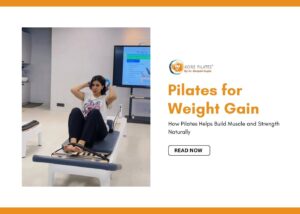
Gaining weight in the form of lean muscle can feel challenging, especially when most fitness conversations focus on weight loss. If you’re looking to build strength and add healthy muscle mass, Pilates offers a unique approach that goes beyond traditional gym workouts.
Pilates helps gain muscle weight through controlled resistance movements that target deep stabilizing muscles while improving overall body composition. When combined with proper nutrition and consistent practice, Pilates exercises for weight gain can create the foundation for natural, sustainable muscle development.
How Pilates Builds Muscle Mass
Pilates works by creating resistance through body weight, springs, and specialized equipment like the Reformer. The controlled movements engage multiple muscle groups simultaneously, creating the tension needed for muscle growth.
Research on Pilates and physical function demonstrated significant improvements in muscle strength, with participants showing gains in handgrip strength, abdominal strength, and lower body strength. The study also revealed increases in appendicular mass, confirming that Pilates effectively builds lean muscle tissue.
Key ways Pilates supports muscle building:
- Progressive resistance: Equipment like Reformers allows you to increase spring tension as you get stronger
- Time under tension: Slow, controlled movements keep muscles engaged longer than quick repetitions
- Eccentric loading: Lengthening muscles under tension creates micro-tears that repair stronger
- Full-body integration: Compound movements work multiple muscle groups in single exercises
Pilates particularly excels at developing core strength and stabilizing muscles that support larger muscle groups. Strong stabilizers allow you to perform activities with better form, reducing injury risk while maximizing muscle engagement.
Pilates Exercises for Weight Gain
Certain Pilates exercises create more resistance and muscle engagement, making them ideal for those focused on gaining weight through muscle development.
Reformer-Based Exercises
The Reformer provides adjustable resistance perfect for progressive overload. Equipment private sessions at iKore Pilates allow you to customize resistance levels to match your strength goals.
Best Reformer exercises for muscle building:
- Footwork variations: Target quads, hamstrings, glutes with adjustable spring resistance
- Long stretch series: Builds upper body and core strength while maintaining plank position
- Leg circles: Strengthens hip flexors, abductors, and core stabilizers
- Pulling straps: Develops back muscles, shoulders, and posterior chain
Mat Pilates for Muscle Development
Mat Pilates relies primarily on body weight but can incorporate props for added resistance. The exercises challenge muscles through precise control and sustained holds.
Effective mat exercises include:
- Roll-ups: Build abdominal strength through spinal articulation
- Leg pull front and back: Create full-body tension similar to advanced plank variations
- Teaser: Demands intense core engagement and hip flexor strength
- Side kick series: Targets hip abductors, glutes, and obliques
If you’re new to Pilates, exploring Pilates for beginners can help you understand foundational movements before progressing to more advanced muscle-building exercises.
Is Pilates Good for Weight Gain?
Pilates alone may not create the same muscle mass as heavy weightlifting, but it offers unique advantages for healthy weight gain. The practice builds lean, functional muscle while improving movement patterns that support other strength training activities.
Studies on functional body composition show that Pilates practice leads to improvements in body weight, skeletal muscle mass, and lean body mass. Research indicates that Pilates, particularly apparatus-based training, increases lean body mass and improves muscle strength significantly.
Pilates supports weight gain by:
- Building lean muscle mass: Creates defined, functional muscle through resistance training
- Improving appetite: Regular exercise increases hunger signals and nutrient needs
- Enhancing recovery: Better movement patterns reduce injury risk that could interrupt training
- Increasing body awareness: Helps you understand proper muscle engagement for maximum growth
- Reducing stress: Lower cortisol levels support better muscle recovery and growth
For optimal weight gain results, combine Pilates with adequate calorie intake and protein consumption. The muscle-building stimulus from Pilates creates demand for nutrients, but you need to supply your body with enough food to support tissue growth.
Combining Pilates with Nutrition for Muscle Gain
Pilates weight gain requires more than just exercise. Proper nutrition turns your training efforts into actual muscle tissue.
Essential nutrition strategies:
- Calorie surplus: Consume more calories than you burn daily
- Protein intake: Aim for adequate protein per kilogram of body weight
- Meal timing: Eat protein and carbohydrates after Pilates sessions
- Whole foods focus: Choose nutrient-dense foods over empty calories
- Hydration: Drink enough water to support muscle recovery and nutrient transport
iKore Pilates offers diet and nutrition online consultation to help you create a personalized nutrition plan that supports your muscle-building goals. Expert guidance ensures you’re eating enough of the right foods to fuel your Pilates practice and support recovery.
Creating Your Pilates Weight Gain Program
Consistency and progression matter more than intensity when building muscle through Pilates. Start with a realistic schedule you can maintain long-term.
Beginning your practice:
- Start with Mat Pilates or Reformer sessions regularly
- Focus on learning proper form and muscle engagement
- Gradually increase time under tension for each exercise
- Track measurements and energy levels, not just scale weight
Building progression:
- Increase session frequency as you build stamina
- Add spring resistance to Reformer exercises
- Incorporate props like resistance bands into Mat exercises
- Consider adding strength training sessions for compound lifts
Advanced development:
- Maintain consistent Pilates practice alongside other training
- Focus on progressive overload in both modalities
- Work with instructors to develop customized programs
- Regular body composition assessments to track lean mass gains
Learning from certified instructors ensures you’re using proper form and getting maximum muscle engagement from each exercise. Consider exploring Pilates courses to deepen your understanding and maximize results.
Ready to start your muscle-building journey with Pilates? Contact iKore Pilates to discuss personalized training options that align with your weight gain goals.
Frequently Asked Questions
Q: Can Pilates alone help me gain weight?
Ans: Pilates can help you gain lean muscle mass, which increases body weight, but significant weight gain typically requires combining Pilates with a calorie surplus and adequate protein intake. Pilates builds functional strength and creates a foundation for other muscle-building activities.
Q: How long does it take to see muscle gain from Pilates?
Ans: Most people notice improved muscle tone and definition within several weeks of consistent practice. Measurable increases in muscle mass typically appear with regular training when combined with proper nutrition. Results vary based on training frequency, intensity, and individual factors like genetics and diet.
Q: Should I do Reformer or Mat Pilates for weight gain?
Ans: Reformer Pilates offers more resistance options and is generally better for building muscle mass. The adjustable springs allow progressive overload that stimulates muscle growth. However, combining both Reformer and Mat Pilates creates comprehensive muscle development while improving movement quality and core strength.
Q: How often should I practice Pilates for muscle gain?
Ans: Aim for regular Pilates sessions throughout the week, allowing rest days for muscle recovery. For optimal muscle gain, consider adding traditional strength training sessions alongside your Pilates practice. Adequate rest between sessions allows muscles to repair and grow stronger.
Q: What should I eat after Pilates to support muscle growth?
Ans: Consume a meal with adequate protein and carbohydrates after your session. Good options include chicken with sweet potato, Greek yogurt with fruit and granola, or a protein shake with banana. Proper post-workout nutrition supports muscle repair and growth, helping you achieve your weight gain goals.