
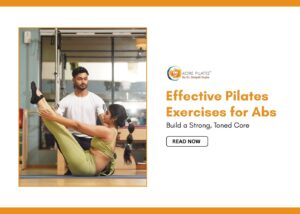
Building strong, toned abs requires more than endless crunches. Pilates offers a comprehensive approach to core training, targeting deep stabilizing muscles that traditional ab workouts often miss. Unlike conventional exercises focusing on superficial muscles, Pilates engages the entire core through controlled movement and breath work, delivering functional strength that translates to better posture, reduced back pain, and improved overall fitness.
Research demonstrates that Pilates training significantly increases the thickness of key abdominal muscles, particularly the transversus abdominis and internal obliques, while simultaneously improving core endurance. Whether practicing at home or in a studio, incorporating Pilates ab exercises into your routine can transform your core strength.
Why Pilates Works Better for Core Strength
Pilates targets the transversus abdominis and internal obliques, the deep core muscles that wrap around your trunk like a natural corset. Studies show that Pilates training increases muscle thickness in these crucial stabilizing muscles while building endurance through exercises like the prone bridge and sit-up tests.
What makes Pilates particularly effective lies in the mind-body connection. The method emphasizes six core principles: breathing, concentration, centering, control, precision, and rhythm. This approach helps build a strong mind-body connection that maximizes muscle activation in every movement.
Research indicates that Pilates exercises efficiently strengthen abdominal muscles through controlled, repetitive movements that create muscular exertion without excessive strain. The exercises can be adapted to provide gentle strength training for rehabilitation or vigorous workouts challenging enough for advanced practitioners.
Essential Pilates Ab Exercises
The Hundred
The Hundred serves as a foundational Pilates exercise that builds core endurance. Lie on your back with legs lifted to tabletop position. Lift your head and shoulders off the mat, extending your arms alongside your body. Pump your arms up and down while taking five short inhales followed by five short exhales, repeating for ten cycles.
This exercise warms up the entire body while engaging both upper and lower abdominals, building cardiovascular endurance, and strengthening hip flexors.
Toe Taps
Toe taps offer an accessible entry point while effectively challenging the lower abs. Lie on your back with legs in tabletop position. Slowly lower one foot to tap the floor, then return to start. Alternate legs while keeping your core engaged and back pressed to the mat, maintaining proper pelvic stability.
Single Leg Stretch
Single leg stretch combines ab strengthening with coordination. Lying on your back, bring one knee toward your chest while extending the other leg at a 45-degree angle. Switch legs in a controlled, rhythmic pattern while keeping your upper body lifted. This exercise targets the lower abdominals and obliques.
The Roll-Up
The roll-up challenges your entire core while improving spinal articulation. Begin lying flat with arms extended overhead. Slowly roll up one vertebra at a time, reaching toward your toes. Reverse the movement with control, articulating back down. This exercise targets the rectus abdominis and improves spinal flexibility.
Criss-Cross
Criss-cross exercises specifically target the obliques. With hands behind your head and legs in a tabletop position, rotate your torso to bring one elbow toward the opposite knee while extending the other leg. Alternate sides with control, focusing on rotational strength and waistline definition.
Plank Variations
Planks engage the entire core, including back, shoulders, and glutes. Hold a forearm or full plank position, maintaining a straight line from head to heels. The plank can be modified with leg lifts or side variations to target different areas of the core.
Understanding the Core “Powerhouse”
When comparing Pilates vs yoga for core strength, Pilates specifically focuses on the “powerhouse”, the muscles of the abdomen, lower back, hips, and pelvic floor. This comprehensive approach ensures balanced development of all core muscles rather than just the visible six-pack muscles.
The transversus abdominis acts as a postural control muscle, consistently activated before any limb movement. Research shows this muscle provides trunk stiffness during dynamic movement, making it essential for both athletic performance and daily activities.
Equipment Options for Enhanced Results
While mat Pilates effectively targets abs using only body weight, equipment adds variety and resistance. Resistance bands create an additional challenge during exercises like single leg stretch. The Pilates Reformer provides spring-loaded resistance for more dynamic and varied core workouts.
At iKore Pilates, our equipment group classes incorporate reformers, barrels, and chairs to enhance core strength development. Private sessions allow for personalized programming based on individual fitness levels and goals.
Building Your Practice
Start with fundamental exercises, focusing on proper form before advancing to more challenging moves. Quality matters more than quantity; a few precise repetitions prove more effective than many sloppy ones. Maintain neutral spine alignment, engage your powerhouse throughout each exercise, and coordinate breathing with movement.
Consistency yields the best results. Regular practice develops the neuromuscular patterns that make core engagement automatic. Whether choosing mat work or reformer training, proper instruction ensures you perform exercises safely and effectively.
For personalized guidance, explore options at iKore Pilates in Pune, where Dr. Deepali Gupta and certified instructors design programs tailored to your specific needs.
Frequently Asked Questions
Q: Can Pilates really build visible abs?
Ans: Yes, Pilates strengthens all layers of abdominal muscles, creating a solid foundation. Visible definition depends on both muscle development and body fat percentage. When combined with proper nutrition, consistent Pilates practice develops strong, toned abs.
Q: What makes Pilates different from regular ab exercises?
Ans: Pilates targets deep stabilizing muscles like the transversus abdominis and internal obliques, not just superficial muscles. The method emphasizes controlled movement, breath coordination, and mind-body connection, creating functional strength that improves posture and reduces back pain.
Q: Do I need equipment to do Pilates ab exercises?
Ans: No equipment is necessary to start. Mat Pilates exercises effectively target your abs using only body weight. However, equipment like reformers and resistance bands can enhance your practice as you progress, providing additional resistance and variety.
Q: How does breathing work in Pilates ab exercises?
Ans: Pilates uses lateral breathing, inhaling through the nose to expand the rib cage sideways while keeping the core engaged, then exhaling through the mouth while drawing the navel toward the spine. This breathing pattern maximizes core activation and supports proper movement execution.
Q: Can beginners safely do Pilates ab exercises?
Ans: Absolutely. Pilates offers modifications for every fitness level. Start with fundamental exercises like toe taps and The Hundred, focusing on proper form and breathing. Gradually progress to more challenging moves as your core strength and body awareness develop.