
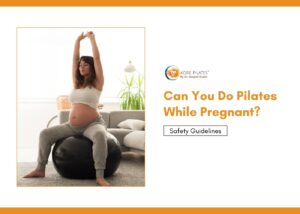
Pregnancy brings countless questions about what activities are safe for you and your growing baby. Among the most common concerns is whether Pilates can be part of your prenatal fitness routine. Good news: when practiced correctly, Pilates is not only safe during pregnancy but also offers significant benefits for both you and your baby.
Why Pilates Is Recommended During Pregnancy
Pilates stands out as an ideal choice because it combines aerobic activity, strength training, and flexibility work in a controlled, low-impact format. Research backs up these recommendations with impressive results. A comprehensive scoping review of Pilates during pregnancy, examining multiple studies, found that women who practiced Pilates experienced significant improvements in sleep quality, pain management, depression symptoms, and disability scores.
A clinical trial on structured Pilates demonstrated even more specific benefits. Women who participated in an 8-week Pilates program experienced reduced labor pain intensity, shorter active labor phases, decreased second-stage duration, and increased maternal satisfaction. Most importantly, the study confirmed that Pilates during pregnancy causes no complications for mother or baby when practiced correctly.
Beyond physical benefits, Pilates helps reduce depression, anxiety, and fear of childbirth while improving sleep quality throughout pregnancy, factors that contribute significantly to overall maternal well-being.
Essential Safety Guidelines for Prenatal Pilates
Before rolling out your mat, understanding key safety principles ensures you practice Pilates safely throughout all three trimesters.
Get Medical Clearance First
Always consult your healthcare provider before starting or continuing Pilates during pregnancy. While generally safe for uncomplicated pregnancies, certain conditions may require modifications or alternative exercise approaches.
Avoid the Supine Position After 16 Weeks
Lying flat on your back for extended periods becomes risky after your first trimester. When you lie supine during the second and third trimesters, your growing uterus compresses the inferior vena cava (a major blood vessel), restricting blood flow to your baby and potentially making you feel dizzy.
Keep supine exercises limited to 30-60 seconds maximum. Better yet, modify exercises to side-lying, seated, or standing positions.
Skip Deep Twisting and Prone Positions
Deep twists that significantly rotate your spine and compress your abdomen should be avoided entirely. Similarly, exercises performed lying on your stomach become uncomfortable and unsafe as your pregnancy progresses.
Monitor for Overheating
Pregnant bodies regulate temperature differently, making overheating a genuine concern. Avoid hot Pilates classes, and ensure your practice space is well-ventilated. Use the “talk test” during exercise: you should be able to maintain a conversation throughout your workout.
Respect Your Body’s Relaxin Levels
Pregnancy hormones, particularly relaxin, soften the tissue between your joints, making you more susceptible to overstretching and injury. Avoid pushing into your end range of motion, even if you were highly flexible before pregnancy.
Trimester-by-Trimester Modifications
Your body changes dramatically throughout pregnancy, requiring different modifications at each stage.
First Trimester Guidelines
Many women can continue their regular Pilates routine during weeks 1-12 with minimal adjustments:
- Reduce traditional “sit-up” style abdominal exercises
- Focus on deep core activation and pelvic floor engagement
- Maintain gentle breathing techniques
- Listen carefully to fatigue signals
- Avoid overheating
Second Trimester Modifications
As your belly grows during weeks 13-27, more significant modifications become necessary:
- Eliminate prolonged supine work (anything over 60 seconds)
- Switch to side-lying, seated, or standing variations
- Avoid most direct abdominal exercises
- Be mindful of your range of motion during rotational movements
- Use props like stability balls, foam rollers, and pillows for support
Third Trimester Adjustments
During weeks 28-40, safety becomes even more critical:
- Avoid ALL supine and prone positions
- Eliminate all direct abdominal work completely
- Focus on chest and back openers to counteract rounded shoulders
- Continue pelvic floor exercises for labor preparation
- Use ample props for comfort and support
Working With Qualified Instructors
Choosing an instructor trained in prenatal Pilates modifications makes an enormous difference in your safety and experience. At IKore Pilates, led by Dr. Deepali Gupta, Asia’s Pilates Ambassador and Balanced Body Master Educator, certified instructors understand the specific needs of pregnant clients and can adapt exercises appropriately throughout your pregnancy journey.
Professional guidance ensures you’re strengthening the right muscles while avoiding movements that could cause diastasis recti (abdominal separation) or other pregnancy-related complications. Ikore Pilates’ studio services include personalized Mat Pilates classes with a maximum of 12 participants per session, ensuring the individual attention crucial during pregnancy.
For fitness professionals interested in learning proper prenatal modifications, Ikore Pilates Education offers comprehensive training programs that cover movement principles and specialized techniques for working with pregnant clients.
Exercises to Avoid During Pregnancy
Certain Pilates movements should be eliminated from your prenatal routine:
- Standing on a reformer (high fall risk)
- Deep backbends and extensions
- Exercises targeting the rectus abdominis (six-pack muscles)
- Any movement causing discomfort, pain, or breathlessness
- High-intensity or plyometric variations
- Exercises requiring balance on unstable surfaces
Signs to Stop and Seek Medical Attention
Stop exercising immediately and contact your healthcare provider if you experience:
- Vaginal bleeding
- Regular painful contractions
- Fluid leaking from the vagina
- Shortness of breath before exertion
- Dizziness or headache
- Chest pain
- Calf pain or swelling
Conclusion
Pilates offers pregnant women a safe, effective way to maintain strength, flexibility, and mental well-being throughout all three trimesters. Research confirms its benefits for labor outcomes, pain management, and maternal satisfaction without causing complications when practiced with proper modifications.
With qualified instruction, medical clearance, and appropriate adaptations for each trimester, prenatal Pilates can help you prepare your body for labor while reducing common pregnancy discomforts. Ready to begin your prenatal Pilates journey? Connect with Ikore Pilates to work with certified instructors who specialize in safe, supportive movement throughout pregnancy.
FAQs
Can I start Pilates for the first time during pregnancy?
Yes, you can begin Pilates during pregnancy, though the first trimester is typically the safest time to start. Work with a prenatal-certified instructor who can teach you proper form and safe modifications from the beginning. Start slowly and build gradually rather than jumping into advanced exercises.
Is reformer Pilates safe during pregnancy?
Reformer Pilates can be safe during pregnancy with proper modifications and instructor guidance. Avoid standing on the reformer carriage due to fall risk, and work with someone trained in prenatal modifications. Many pregnant women find the reformer’s support helpful for modified exercises.
How often should I do Pilates while pregnant?
Aim for 2-3 Pilates sessions per week as part of your overall 150 minutes of moderate exercise. Balance Pilates with other prenatal-friendly activities like walking or swimming. Always allow rest days between sessions for recovery.
When should I stop doing Pilates during pregnancy?
You can typically continue modified Pilates throughout your entire pregnancy, potentially even up to your due date, if you feel comfortable and your healthcare provider approves. However, listen to your body and stop any exercise that feels uncomfortable or causes pain.