
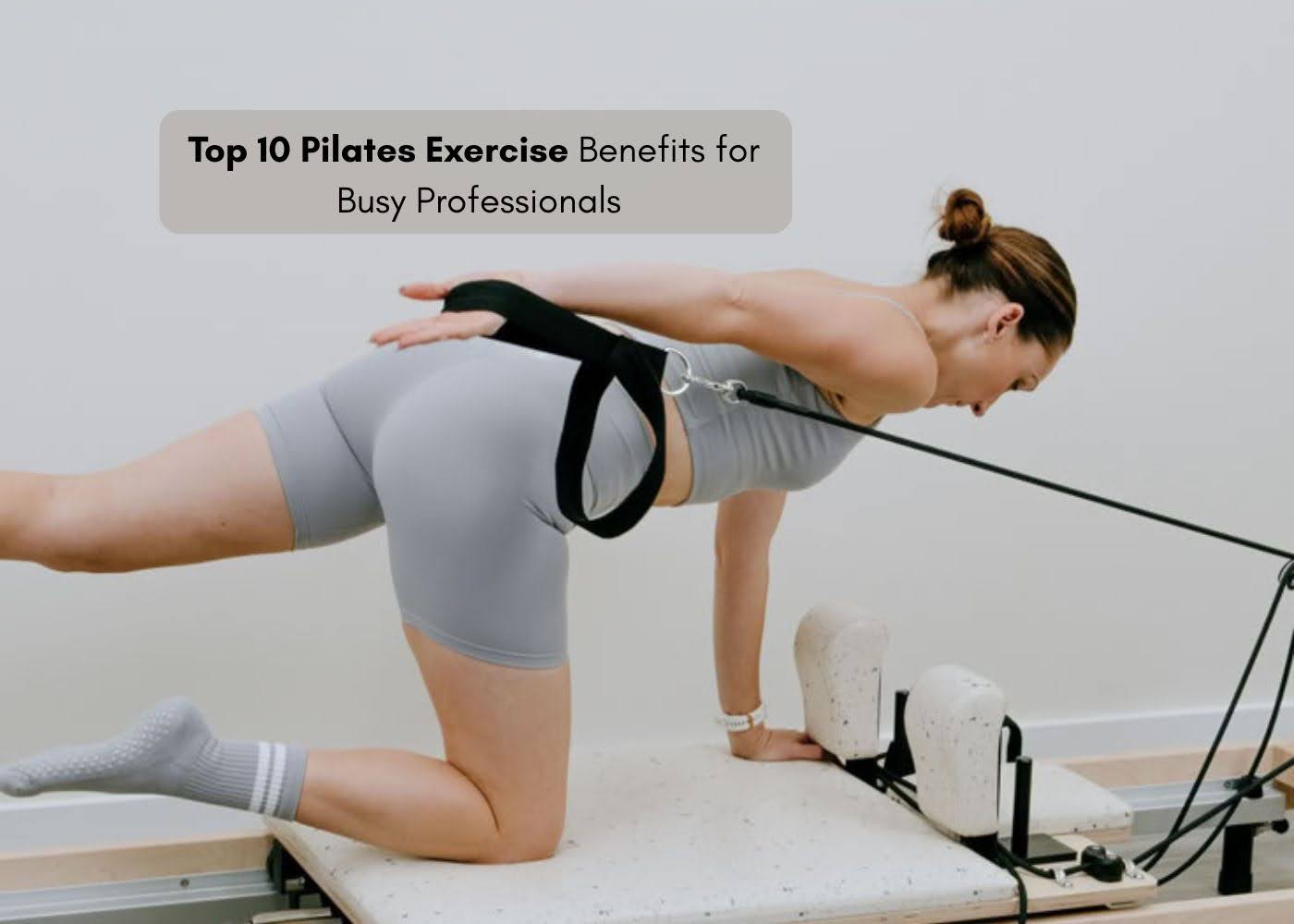
Picture this: It’s 9 PM on a Wednesday. You’ve been glued to your laptop since morning, your neck feels like it’s hosting a cricket match of knots, and your lower back is staging a protest. Sound familiar? If you’re nodding (and wincing), you’re not alone. The modern professional lifestyle has turned our bodies into question marks: hunched shoulders, tight hips, and a spine that’s forgotten what “straight” means.
But here’s the good news: Pilates isn’t just another fitness trend that demands two hours of your already-packed day. It’s a strategic, efficient workout that targets exactly what busy professionals need most: strength without strain, flexibility without fuss, and mental clarity without meditation marathons.
Let’s talk about the real pilates benefits that can transform your 9-to-9 grind into something your body actually enjoys.
Why Pilates Makes Sense for Your Schedule
Before we dive into the specific pilates exercise benefits, let’s address the elephant in the room: time. You barely have enough hours to answer emails, let alone commit to elaborate workout routines. That’s where Pilates stands out. A focused 30-45 minute session gives you more bang for your buck than an hour of unfocused gym time.
At iKore Pilates, founded by Dr. Deepali Gupta, Asia’s Pilates Ambassador and Master Educator, the approach centers on movement principles that build balanced body strength efficiently. Whether you’re practicing through their innovative Pilates 3-D online program (with scheduled one-on-one sessions using dual-camera angles for real-time correction) or attending studio sessions in Aundh or Hinjewadi, the focus remains on quality over quantity.
The Top 10 Pilates Workout Benefits for Busy Professionals
1. Posture Correction: Undoing the Desk Damage
Eight hours of sitting creates a domino effect of postural issues. Your shoulders roll forward, your chin juts out, and your spine curves into shapes it was never meant to hold. Pilates strengthens the muscles along your spine, those deep postural supporters that gym workouts often miss.
Through exercises that focus on spinal alignment and balanced body movement principles, you’ll notice yourself sitting taller naturally. That confident, upright posture isn’t just about looking good in meetings; it’s about functional strength that carries into every movement of your day.
2. Back Pain Relief That Actually Lasts
Lower back pain is practically the unofficial ailment of desk jobs. Pilates addresses this by strengthening your core, not just your abs, but the entire cylinder of muscles that wrap around your trunk, including your pelvic floor and deep abdominals.
The benefits of pilates for a woman are particularly notable here, as hormonal changes and pregnancy can further impact core strength and back health. The controlled, low-impact movements create stability without jarring your spine, offering relief where other exercises might aggravate.
3. Stress Management Through Movement
Pilates offers stress relief through:
- Controlled breathing techniques that activate your parasympathetic nervous system, shifting you out of fight-or-flight mode
- Mindful movement patterns that demand present-moment focus, giving your anxious brain a break from the to-do list spiral
- Physical release of tension stored in tight muscles, particularly in the hips, shoulders, and jaw
- Improved sleep quality as your nervous system learns to down-regulate more effectively
Unlike high-intensity workouts that can sometimes increase cortisol, Pilates balances physical challenge with nervous system regulation. When you’re learning proper movement under expert guidance, such as through iKore’s comprehensive instructor training programs, you gain tools for stress management that extend beyond the mat.
4. Energy Boosts Without Caffeine
Paradoxically, the right kind of exercise gives you energy rather than depleting it. Pilates improves circulation, enhances breathing efficiency, and activates your body without exhausting it. The focus on breath, inhaling deeply into your ribcage and exhaling completely, increases oxygen flow to your brain and muscles.
After a Pilates session, you’ll notice that alert-but-calm feeling that no amount of coffee can replicate. Your body feels worked but not wiped out, making it perfect for morning sessions before work or lunchtime movement breaks.
5. Mental Clarity and Focus
The concentration required in Pilates creates an interesting side effect: improved cognitive function. When you’re focused on maintaining neutral spine alignment while performing a precise movement pattern, there’s no mental bandwidth left for worrying about that presentation or replaying awkward conversations.
This mindful movement practice trains your brain to focus single-pointedly, a skill that translates directly to improved concentration at work. Research suggests that regular Pilates practice can improve memory, learning, and executive function, basically, the exact skills you need to excel professionally.
6. Flexibility Without the Yoga Commitment
Key mobility improvements include:
- Hip flexibility that makes sitting cross-legged or squatting comfortable again
- Shoulder mobility that reverses the forward slump of desk work
- Spine articulation through all ranges of motion: flexion, extension, rotation, and lateral bending
- Hamstring lengthening that reduces lower back strain
If you’ve wondered about the differences between movement practices, this guide on Pilates vs Yoga for core strength offers valuable insights. While yoga emphasizes static holds and spiritual practice, Pilates focuses on dynamic, controlled movements that build both strength and flexibility simultaneously.
7. Core Strength That Goes Beyond Aesthetics
Forget six-pack abs (though they’re a nice bonus). True core strength, the kind Pilates develops, is about functional power. It’s the difference between throwing out your back when you lift a suitcase and moving with confidence and ease.
The Movement Principles foundation at iKore Pilates teaches you to recognize, improve, and master fundamental movement patterns. This cornerstone of their education program focuses on balanced body movement principles that make every activity, from carrying groceries to playing with kids, safer and more efficient.
| Traditional Core Workouts | Pilates Core Training |
| Isolated abdominal exercises (crunches, planks) | Integrated movements engage the entire core cylinder |
| Often creates tightness without flexibility | Builds strength with equal emphasis on mobility |
| Focus on external “six-pack” muscles | Targets deep stabilizers (transverse abdominis, pelvic floor, multifidus) |
| It can aggravate back pain if the form is poor | A rehabilitative approach is safe for back issues |
| Limited breathing integration | Breath is fundamental to every movement |
| Repetitive, potentially boring | Varied exercises using a mat and equipment |
8. Body Awareness That Prevents Injuries
How you move matters more than how much you move. Pilates cultivates proprioception, your body’s sense of where it is in space. This heightened awareness helps you notice when you’re slouching before it becomes painful, or when you’re compensating with the wrong muscles during movement.
For busy professionals who might rush through workouts or ignore early warning signs of strain, this body awareness is preventive medicine. You’ll catch imbalances before they become injuries, and you’ll move through your day with more grace and less pain.
9. Joint-Friendly Strength Building
Your knees, hips, and shoulders don’t bounce back from high-impact exercise the way they did in your early twenties. The 10 benefits of pilates include this crucial factor: you build serious strength without the wear-and-tear of running or heavy lifting.
Equipment-based Pilates, using reformers, chairs, and barrels, provides adjustable resistance through springs rather than gravity and weights. This means your joints stay protected while your muscles get challenged. Whether you’re recovering from an old injury or simply want a sustainable exercise practice, this low-impact approach delivers results without risks.
10. Breathing Efficiency for Better Health
Most people breathe shallowly, using only the top third of their lungs. Pilates retrains your breathing pattern through three-dimensional rib expansion, breathing into your sides and back, not just your chest. This full-breath pattern:
- Improves oxygen delivery to your brain and muscles
- Supports better circulation and lymphatic flow
- Enhances core activation (your diaphragm is part of your core!)
- Reduces anxiety and improves stress resilience
Learning proper breathing technique transforms both your practice and your daily life. Even in stressful moments at work, you’ll have the tool of conscious breath to reset your nervous system.
Getting Started: Making Pilates Work for Your Life
The beauty of modern Pilates accessibility means you don’t need to carve out extra commute time. iKore Pilates offers solutions for every schedule. Their Pilates 3-D online program brings one-on-one instruction to your home through scheduled appointments with certified instructors who provide real-time corrections via a dual-camera setup.
Wondering if online Pilates is as effective as studio training? The answer is yes, when done with proper instruction. The scheduled appointment format creates accountability (you can’t skip when an instructor is waiting), while the technology enables the same quality of form correction you’d receive in person.
The benefits of doing pilates extend far beyond any single session. Consistency is key; two to three sessions per week will deliver noticeable changes within four to six weeks. Your posture improves, your pain decreases, your energy increases, and that constant background tension starts to release.
FAQs
Q1. How often should busy professionals practice Pilates to see benefits?
Two to three sessions per week are ideal for noticeable improvements. iKore Pilates offers flexible scheduling through both online and studio options, making it easier to maintain consistency even with demanding work schedules.
Q2. Can Pilates help with specific issues like neck pain from computer work?
Absolutely. Pilates addresses postural imbalances and strengthens the muscles supporting your neck and shoulders. Certified instructors at iKore can modify exercises to target your specific problem areas while building overall balanced strength.
Q3. Do I need special equipment to practice Pilates at home?
Not necessarily. While equipment like reformers adds variety and challenge, mat Pilates with minimal props (like resistance bands or small balls) is highly effective. The Pilates 3-D online program provides guidance on equipment-free options as well as how to maximize simple tools.
Q4. Is Pilates suitable for someone with no fitness background?
Yes, Pilates is perfect for beginners. The Movement Principles foundation taught at iKore Pilates starts with basic body awareness and builds progressively. Exercises can be modified to any fitness level, making it accessible whether you’re returning to exercise or have been active for years.
Q5. What’s the difference between general Pilates classes and iKore’s approach?
iKore Pilates is led by Dr. Deepali Gupta, Asia’s Pilates Ambassador and Balanced Body Master Educator, bringing medical expertise to movement education. The emphasis on Movement Principles, small class sizes (max 12), and integration of rehabilitation approaches sets it apart from generic fitness classes. Learn more about what makes iKore’s training unique here.