
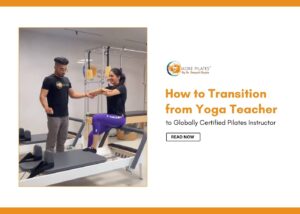
As a yoga teacher, you already understand the power of mindful movement and breathwork. But have you considered adding Pilates to your teaching repertoire? Your yoga background gives you a strong foundation for becoming a certified Pilates instructor in India, and the career opportunities extend far beyond traditional studio settings.
The wellness industry increasingly values instructors who can offer multiple modalities. Nearly 40% of studio owners report needing more qualified instructors, making this transition particularly timely for yoga teachers seeking to expand their expertise.
Why Yoga Teachers Make Great Pilates Instructors
Your experience as a yoga teacher has already equipped you with many skills that translate beautifully to Pilates instruction. You understand body awareness and alignment, you know how to cue movements clearly, and you’re comfortable creating a supportive space for students of all levels. Both practices emphasize the mind-body connection, though Pilates takes a more direct, structured approach focused on core strength and rehabilitation.
The main difference lies in methodology. While yoga flows through poses with spiritual elements, Pilates follows specific exercise sequences with precise biomechanical principles. Understanding what qualifications you need to teach Pilates legally in India ensures you’re properly prepared for this career shift.
What You Need to Get Started
Before diving into certification, experience Pilates firsthand as a student. Taking mat classes and reformer sessions will help you understand the method’s unique approach and determine if adding Pilates aligns with your teaching goals.
When choosing a certification program, look for these essential components:
- Comprehensive anatomy and biomechanics training covering how movements affect muscles, joints, and common pathologies
- Mat Pilates foundation, starting with fundamental exercises and progressions
- Equipment training on reformers, chairs, barrels, and other apparatus
- Hands-on practice teaching with feedback from experienced instructors
- Global recognition ensures your certification is valued internationally
At Ikore Pilates, led by Dr. Deepali Gupta (Asia’s Pilates Ambassador 2023 & 2024), you’ll receive training that bridges healthcare and fitness through movement-based rehabilitation. The programs offer both in-person training in Pune and flexible online options, making it accessible regardless of your location.
The Certification Path for Yoga Teachers
Most comprehensive Pilates certifications require 200-600 hours of study, but as a yoga teacher, you’ll find certain aspects familiar. The learning curve is manageable when you already understand body mechanics and teaching methodology.
Step 1: Start with Movement Principles
Begin with foundational training that covers balanced body movement principles. At Ikore Pilates, the Movement Principles course forms the cornerstone of the education program. You’ll learn to recognize, improve, and teach fundamental movement using Pilates principles of movement progression, essential knowledge that applies across all equipment and mat work.
Step 2: Progress to Mat Pilates
Once you’ve completed Movement Principles, move on to Mat Pilates training. Mat work forms the basis of all Pilates practice and requires no equipment, making it the perfect next step. You’ll learn the classical repertoire, modifications for different bodies, and how to progress students safely through beginner, intermediate, and advanced levels.
Step 3: Learn Equipment (Reformer)
Equipment training deepens your understanding of Pilates principles and dramatically expands what you can offer clients. The reformer is the most popular apparatus, offering spring resistance that adds challenge and support. Learning reformer instruction positions you for higher earnings and more diverse teaching opportunities.
Step 4: Complete Comprehensive Training
Comprehensive teacher training includes anatomy, biomechanics, postural analysis, and all equipment. Many programs require practice teaching hours where you work with real clients under supervision, building confidence before launching your Pilates career independently.
International Recognition Opens Global Doors
One significant advantage of proper Pilates certification is international portability. If you’re interested in teaching beyond India, understanding which international Pilates certifications are accepted in GCC countries can open doors to lucrative opportunities in Dubai, Saudi Arabia, and other Gulf markets where qualified instructors are in high demand.
The wellness industry in these regions actively seeks certified professionals who can deliver evidence-based movement therapy. For women specifically, Pilates career opportunities in GCC countries continue expanding as the region invests heavily in health and wellness infrastructure.
Balancing Both Practices in Your Career
You don’t have to choose between yoga and Pilates. Many successful instructors teach both, offering students the benefits of each practice. Yoga provides flexibility, spiritual connection, and stress relief, while Pilates delivers core strengthening, precise alignment work, and rehabilitation support.
Teaching both practices can actually enhance your career stability. You’ll appeal to a broader client base, command higher rates for specialized knowledge, and provide more comprehensive programming. Some students prefer yoga’s flowing meditative quality, while others respond better to Pilates’ structured approach.
The Financial and Career Benefits
Investing in Pilates certification pays off through expanded earning potential and career opportunities. Certified Pilates instructors typically earn higher rates than general fitness instructors, with private sessions commanding premium pricing.
Career opportunities span boutique studios, fitness centers, private practice, and online teaching. You could specialize in prenatal and postnatal work, athletic performance, or rehabilitation, areas where your combined yoga and Pilates expertise creates unique value. The clinical foundation of Pilates also opens doors to partnerships with healthcare providers and working with rehabilitation clients.
Taking the Next Step
Making the transition from yoga teacher to certified Pilates instructor is an investment in your professional growth and your students’ well-being. You’re not abandoning yoga; you’re expanding your ability to serve different needs and movement goals.
The Pilates industry needs qualified, thoughtful instructors who understand alignment, can read bodies, and create safe, effective programming. Your yoga teaching background has already prepared you for success in this field.
Ready to begin your Pilates certification journey? Explore Ikore Pilates teacher training programs and take the first step toward redefining your teaching excellence. With programs designed for both in-person and online learning, you can start your transformation into a dual-modality movement expert while continuing your current teaching practice.
FAQs
How long does it take to get certified?
Most programs take 6-12 months to complete, depending on whether you study full-time or part-time. Self-paced online options allow you to work around your current teaching schedule. Ikore Pilates offers flexible formats that accommodate working professionals.
Can I teach Pilates without equipment certification?
Yes, you can start teaching mat Pilates with just mat certification. However, equipment training significantly expands your career options since most studios have reformers and other apparatus. Clients seeking rehabilitation or advanced training often prefer equipment-based sessions.
Will my yoga teaching skills transfer?
Absolutely. Your cueing abilities, class management skills, and understanding of body awareness will serve you well. You’ll need to learn Pilates-specific techniques and principles, but your teaching foundation is solid. The anatomical knowledge you’ve developed through yoga provides an excellent starting point.
What if I don’t have a fitness background?
Yoga teaching counts as movement education experience. Quality Pilates programs welcome yoga teachers and provide all the additional knowledge you need. Your understanding of breathing, body mechanics, and student psychology gives you a significant advantage.
7 Responses