
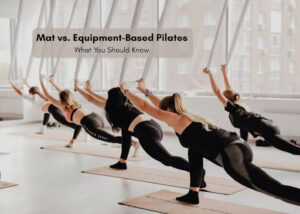
You’ve heard the buzz about Pilates. Maybe a friend raves about their reformer sessions, while another swears by mat classes. The question stands: which one should you try? The truth is, both mat and equipment-based Pilates offer something beautiful, and understanding the difference between mat and equipment Pilates helps you choose the path that fits your body and lifestyle.
At iKore Pilates in Pune, where Dr. Deepali Gupta, Asia’s Pilates Ambassador and Balanced Body Master Educator, leads the practice, students often ask this very question. The answer isn’t about which is better. It’s about what serves you best right now.
Introduction to Mat Pilates: Your Foundation
Mat Pilates is where the Pilates journey often begins. Picture yourself on a soft, supportive mat, moving through gentle yet powerful exercises that wake up muscles you didn’t know existed. Your body becomes both the student and the teacher.
This practice relies entirely on your bodyweight for resistance. No machines, no springs, just you, gravity, and sometimes a few versatile props like foam rollers, resistance bands, or Pilates magic circles. At iKore Pilates, mat classes ensure every person receives personalized attention from certified instructors trained under Dr. Deepali Gupta guidance.
The beauty of mat Pilates lies in its simplicity. You can practice it almost anywhere, at home, in a studio, or even while traveling. It builds deep core strength, enhances flexibility, and develops that mind-body connection Pilates is famous for. Each movement demands control, balance, and body awareness. When people compare Pilates vs yoga for core strength, mat Pilates often stands out for its targeted approach to abdominal and back muscles.
Mat Pilates for flexibility works wonders because the exercises flow through full ranges of motion, stretching and strengthening simultaneously. You’re not just building muscle; you’re teaching your body to move with grace and efficiency.
If you’re curious about how Pilates training helps build this mind-body connection, the practice offers a unique approach to understanding your body from the inside out.
Equipment-Based Pilates: Precision Meets Support
Step into the equipment studio at iKore Pilates, and you enter a different world. The Reformer, Cadillac, Wunda Chair, and barrels stand ready, elegant machines, refined over decades of practice.
Equipment-based Pilates uses springs and pulleys to create adjustable resistance. This changes everything. The springs can assist your movement when you need support or challenge you when you’re ready for more. The machines guide your alignment, offering feedback your body understands instinctively.
The Reformer, perhaps the most recognized piece of Pilates equipment, uses a sliding carriage and springs to provide resistance. Exercises like footwork and leg circles on the Reformer engage your core while building strength and improving postural alignment. The versatility is remarkable; beginners find support while advanced practitioners discover endless progression.
Equipment-based pilates flexibility often surpasses what’s achievable on the mat alone. The machines allow for movements and stretches that gravity and bodyweight simply can’t replicate. Your body moves through space in ways that feel both challenging and surprisingly natural.
For anyone recovering from injury or managing specific physical conditions, equipment-based Pilates offers something special. The Cadillac, for instance, has straps that support lifts and stretches, letting you focus on movement patterns without stress. The equipment becomes a partner in your rehabilitation, holding space for your body to heal and strengthen.
Mat Pilates vs Machine Pilates: Flexibility Understanding the Difference
When comparing mat pilates vs machine pilates flexibility, consider what each practice emphasizes. Mat work develops flexibility through bodyweight exercises that demand stability and control. You’re constantly engaging stabilizer muscles, which build functional flexibility, the kind that translates into everyday life.
Machine-based work, on the other hand, allows for deeper, more supported stretches. The springs can assist you in reaching positions you might not access on the mat alone. This often leads to faster improvements in range of motion, particularly for those with tight muscles or limited mobility.
Neither approach is superior. They complement each other beautifully, each offering unique benefits for flexibility development.
Mat vs Equipment-Based Pilates: A Clear Comparison
| Aspect | Mat Pilates | Equipment-Based Pilates |
| Resistance | Bodyweight and gravity | Adjustable spring resistance |
| Equipment Needed | Mat and optional props (bands, balls, foam rollers) | Reformer, Cadillac, Wunda Chair, Barrels |
| Accessibility | Highly portable, practice anywhere | Requires studio access or significant home investment |
| Cost | More affordable for classes and home practice | Higher investment due to equipment and specialized instruction |
| Best For | Building foundational strength, core stability, and practicing at home | Targeted muscle training, rehabilitation, progressive resistance work |
| Class Size | Can accommodate larger groups | Often, smaller groups or private sessions |
| Learning Curve | Beginner-friendly, builds body awareness | Can be approached at any level with proper instruction |
| Variety | Classic repertoire with prop variations | Extensive exercise library with infinite modifications |
Why Choose Mat Pilates?
Building Your Foundation Mat Pilates teaches you the fundamental principles that make all Pilates work. You learn to find your core, control your breath, and move with precision. The Movement Principles course at iKore Pilates, which forms the cornerstone of their education program, emphasizes these balanced body movement principles.
Without machines to guide you, your proprioception, your sense of where your body is in space, sharpens dramatically. This body awareness transfers into everything you do, from how you sit at your desk to how you move through your day.
Flexibility and Convenience. The practical advantages matter. Mat classes generally cost less than equipment sessions. You can practice at home with minimal investment. The exercises travel with you, fitting into hotel rooms and small spaces.
At iKore’s mat classes, you’ll find all three levels, Beginner, Intermediate, and Expert, each building on the last.
Why Choose Equipment-Based Pilates?
Targeted Training and Rehabilitation Equipment-based Pilates shines when you need specific support. Recovering from a knee injury? The Reformer allows you to strengthen surrounding muscles while the equipment supports proper alignment. The springs can assist or resist, adapting to exactly what your body needs today.
Dr. Deepali Gupta’s background in movement therapy and rehabilitation makes iKore Pilates particularly skilled in this area. The equipment becomes a tool for healing, not just fitness.
Progressive Resistance: As you grow stronger, the equipment grows with you. Simply adjust the springs, change your body position, or modify the tempo. This built-in progression keeps the practice challenging for years. Athletes and dancers often love equipment work for this reason; it continually pushes their bodies to new levels of strength and control.
Variety and Engagement: The Wunda Chair challenges your balance. The Cadillac offers that glorious supported stretch. The Barrel improves spinal mobility. Each piece of equipment brings something unique to your practice, keeping sessions fresh and engaging.
Mat Pilates vs Pilates Equipment Results: What to Expect
Both practices deliver results, though the timeline and nature of those results differ slightly. Mat pilates vs pilates equipment results often depend more on consistency and proper instruction than the format itself.
Mat Pilates builds deep, functional strength. Your core becomes rock-solid. Your posture improves. You feel taller, more aligned, more in control of your body. These changes happen gradually but profoundly.
Equipment work can produce visible results slightly faster, particularly in muscle tone and flexibility. The adjustable resistance allows for more targeted muscle work, and the support helps you achieve positions that accelerate strength gains.
The real magic happens when you do both. At iKore Pilates, many students combine mat classes with equipment sessions, experiencing the full spectrum of what Pilates offers.
Finding Your Path at iKore Pilates
Whether you choose mat or equipment, quality instruction makes all the difference. At iKore Pilates’ locations in Aundh and Hinjewadi pilates in pune, you’ll find instructors trained under Dr. Deepali Gupta’s exacting standards. Her philosophy, “It doesn’t challenge you. It does change you”, infuses every class.
The studio offers both group equipment classes and one-on-one private sessions. When deciding between group Pilates classes vs private Pilates sessions, consider your learning style and goals. Rehab Pilates sessions specifically support those recovering from injury, surgery, or managing medical conditions. The low-impact, controlled movements are tailored to individual needs, often incorporating Reformer work for safe, effective recovery.
For beginners, starting with Mat 1 builds your foundation. You’ll learn proper form, breath work, and the fundamental exercises that underpin all Pilates practice. From there, you might progress to Mat 2 for more advanced work, or branch into equipment classes to experience that spring resistance.
The Verdict: Which Should You Choose?
The difference between mat and equipment Pilates isn’t about better or worse; it’s about different tools for different goals. Mat work builds incredible body awareness and functional strength with minimal equipment. Equipment work offers targeted training, rehabilitation support, and an endless variety.
Many people find that combining both creates the most well-rounded practice. Mat work keeps you grounded in the fundamentals, while equipment sessions push you into new territory.
The best choice? The one that gets you on the mat or Reformer consistently. The practice that makes you feel stronger, more flexible, and more connected to your body. At iKore Pilates, you’ll find both paths expertly guided, with Dr. Deepali Gupta’s wisdom illuminating the way.
Your Pilates journey is uniquely yours. Whether you begin on the mat or the Reformer, you’re stepping into a practice that will change how you move through the world.
Ready to Start Your Pilates Journey?
If you’re passionate about deepening your Pilates practice or considering a career in this transformative field, iKore Pilates offers comprehensive instructor training programs. Why choose iKore Pilates for your instructor training? You’ll train under Dr. Deepali Gupta, Asia’s Pilates Ambassador, gaining internationally recognized certification through Balanced Body.
Interested in becoming a certified instructor? Check out the best Pilates certification courses in India to see how iKore’s programs stand out in quality, depth, and expert instruction. Contact us now!
Frequently Asked Questions
Q. Can beginners start with equipment-based Pilates, or should they begin with mat classes?
Ans. Beginners can start with either format. Mat classes help you learn fundamental principles with minimal equipment, while equipment work can actually make some movements easier by providing support. At iKore Pilates, instructors assess your needs and guide you to the best starting point.
Q. How does mat pilates for flexibility compare to equipment-based flexibility training?
Ans. Mat Pilates develops flexibility through controlled bodyweight movements that build functional range of motion. Equipment work allows for deeper, more supported stretches due to spring assistance. Both improve flexibility effectively, and combining them often yields the best results.
Q. Is equipment-based Pilates better for rehabilitation than mat work?
Ans. Equipment Pilates often provides better support during rehabilitation because the machines guide alignment and can assist movements. However, mat work also plays a role in recovery. At iKore Pilates, rehabilitation programs typically incorporate both, depending on your specific condition and stage of healing.
Q. How often should I practice mat versus equipment Pilates?
Ans. Most people benefit from 2-3 Pilates sessions per week, mixing mat and equipment work. Your schedule, goals, and access to equipment will influence this. Consistency matters more than format; regular practice, whether mat or equipment-focused, delivers the best results.
Q. Do mat and equipment Pilates work different muscles?
Ans. Both formats work the same muscle groups, particularly the core, but in different ways. Mat work relies on stabilizer muscles more heavily, while equipment allows for more isolated, targeted muscle training. Together, they provide comprehensive full-body conditioning that improves strength, flexibility, and body awareness.