
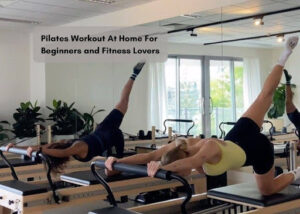
Your yoga mat is rolled out. The morning light filters through your window. You have twenty minutes before your day officially begins. This is your moment, and Pilates at home is about to transform how you approach fitness.
Whether you’re juggling work deadlines, managing a household, or simply prefer the comfort of your own space, practicing pilates exercises at home offers a practical solution that fits into your life rather than demanding you rearrange it. The beauty of this mind-body practice lies in its accessibility: no fancy equipment required, no commute to a studio, just you, your mat, and a commitment to moving with intention.
Why Pilates at Home Actually Works
Pilates focuses on core strength, controlled movements, and the connection between breath and motion. Unlike high-impact workouts that leave you drenched and exhausted, this low-impact practice builds strength from the inside out, targeting those deep stabilizing muscles that support your spine and improve your posture.
The real question isn’t whether you can do pilates at home; it’s whether you’re ready to experience how sustainable fitness can be when it meets you where you are. Home practice removes barriers. No studio schedules to coordinate. No self-consciousness about getting the moves right in front of others. Just the freedom to learn at your own pace, pause when you need to, and build confidence with each session.
That said, understanding proper form matters deeply in Pilates. This is where learning from certified instructors becomes invaluable, even if you’re practicing independently. iKore Pilates, led by Dr. Deepali Gupta, Asia’s Pilates Ambassador and Master Educator, specializes in teaching the fundamentals that make home practice both safe and effective.
Setting Up Your Home Practice Space
Creating your pilates workout at home requires minimal investment. A quality mat provides cushioning for your spine during floor work. Comfortable clothing that allows a full range of motion matters more than matching workout sets. Natural light and a clutter-free space help you focus, though even a small corner of your bedroom works perfectly.
As you progress, simple props like resistance bands, foam rollers, or small balls can add variety. But initially? Your body weight provides all the resistance you need.
Beginner Foundations vs. Advanced Progressions
Understanding where you are in your fitness journey helps you choose appropriate exercises. Here’s how pilates for beginners at home differs from what fitness lovers might explore:
| Aspect | Beginner Approach | Advanced Approach |
| Focus | Proper alignment, core activation, and controlled breathing | Seamless transitions, increased repetitions, complex variations |
| Leg Position (Hundred) | Knees bent in tabletop, feet lifted | Legs extended at 45 degrees, maintaining lower back contact |
| Plank Modifications | Knees down, 20-30 second holds | Full plank with leg lifts, extended holds with variations |
| Pace | Slow, deliberate movements with frequent breaks | Flowing sequences with minimal rest |
| Equipment | Mat only, occasional wall support | Addition of resistance bands, stability balls, and circles |
The progression from beginner to advanced isn’t about rushing. Building proper form at foundational levels prevents injury and ensures you’re actually strengthening the right muscles.
Essential Moves for Starting Your Practice
For Those New to Movement
Pelvic Tilts: Lying on your back with knees bent, gently rock your pelvis to understand spinal articulation. This simple move teaches core engagement without strain, the foundation of everything that follows.
Modified Hundred: Keep your head supported if lifting creates neck tension. Focus on the breathing pattern: five short inhales, five short exhales, while your arms pulse gently by your sides. This classic exercise warms up your entire system.
Shoulder Bridge: Press through your feet to lift your hips, creating a straight line from shoulders to knees. Hold for several breaths, then lower one vertebra at a time. This strengthens your glutes and hamstrings while teaching spinal control.
Single Leg Stretch (Modified): With your back supported, hug one knee while extending the other leg. Alternate in a gentle bicycle motion. This core-focused move improves coordination and stability.
Kneeling Plank: Building upper body and core strength starts here. Maintain a neutral spine from head to knees, engaging your abdominals to prevent sagging.
For Fitness Enthusiasts Ready to Challenge Themselves
Advanced Hundred: Extend both legs straight at 45 degrees while maintaining that crucial lower back connection to the mat. Your head and shoulders lift off the ground as you pulse through 100 counts. This variation demands significant core control.
Roll Up: The ultimate test of abdominal strength and spinal articulation. Peel yourself off the mat vertebra by vertebra, reaching forward toward your toes, then reversing with equal control. No momentum allowed.
Leg Pull Front: From a full plank, lift one leg and pulse it upward while keeping your hips level and stable. This advanced move challenges your entire posterior chain while demanding serious core stability.
Crisscross: Twist your torso to bring the opposite elbow and knee together while extending the other leg. Alternate sides in controlled motion, engaging your obliques throughout.
Swimming: Lying face down, extend opposite arm and leg simultaneously, then alternate in a swimming motion. This strengthens your back extensors and improves coordination.
The services at iKore Pilates include personalized sessions that help you master these progressions safely, ensuring you’re ready for each new challenge.
The Form, Breath, and Safety Balance
How you do pilates at home matters as much as which exercises you choose. Every movement in Pilates connects to your breath. Typically, you’ll exhale during exertion, when you’re lifting, curling, or engaging most intensely, and inhale during release or preparation phases.
Your core activation should feel like drawing your navel toward your spine, not holding your breath or clenching. This engagement protects your lower back and powers every movement.
Listen to your body’s signals. Sharp pain means stop. Gentle burning in your muscles means you’re working appropriately. Pilates challenges you without destroying you, if you’re struggling to maintain form, modify the exercise or take a break.
When Home Practice Meets Professional Guidance
There’s tremendous value in self-directed practice, but certain situations call for expert eyes. If you’re recovering from injury, managing chronic pain, or want to ensure your form is truly correct, working with certified instructors accelerates your progress while keeping you safe.
iKore Pilates offers something unique for home practitioners: Pilates 3-D, a scheduled online program that brings certified instruction directly into your space. Unlike pre-recorded videos you follow along with, this approach uses a dual-device setup, your phone and laptop, or two tablets, giving your instructor simultaneous front and side views of your form.
During your scheduled one-on-one session, real-time corrections flow naturally. “Engage deeper through your lower abdominals.” “Lengthen your spine as you roll down.” These precise adjustments, delivered as you move, help your body understand correct positioning in ways that generic videos simply cannot.
The scheduled appointment structure creates accountability. When an instructor is waiting for you, showing up becomes natural. Consistency builds results, and structure builds consistency.
This bridges the gap many people experience between wanting to practice at home and actually building a sustainable routine. You gain the convenience of home practice with the personalized attention typically only available in studio settings.
For those interested in deepening their understanding of how movement supports mental wellness, explore this resource on pilates for stress relief and mental health.
Building Your Sustainable Practice
Twenty minutes daily produces noticeable changes. Your posture improves. Your core strengthens. Those nagging lower back issues often diminish. But these benefits compound only with consistency.
Start small. Choose three exercises and repeat them for one week. Familiarity builds confidence. Once these moves feel natural, add new variations. Progress gradually rather than attempting everything at once.
Morning sessions energize your day. Evening practice helps release tension accumulated through hours of sitting. Find the timing that works for your schedule and protect it, this is your investment in yourself.
The relationship between proper posture and flexibility deepens as your practice evolves. Understanding how pilates posture exercises improve flexibility can motivate your consistency.
Moving Forward
Your pilates workout at home can be as simple or sophisticated as your current needs demand. Begin with the foundations, respect the learning process, and remember that this practice meets you where you are while gently encouraging you forward.
Whether you choose entirely self-directed practice or integrate professional guidance through programs like Pilates 3-D, the key is beginning. Your mat is waiting. Your body is capable. The practice that transforms countless lives around the world is entirely accessible to you, right now, in your own space.
Discover more about the complete range of offerings at iKore Pilates, including their comprehensive education programs for those interested in deepening their practice or pursuing instructor certification.
Frequently Asked Questions
Q. Can complete beginners safely start Pilates at home without any prior experience?
Ans. Yes, with proper guidance on foundational exercises and form. Begin with modified versions of basic moves, focus on breathing and core engagement, and consider scheduling a few sessions with certified instructors to establish correct technique before continuing independently.
Q. How many times per week should I practice pilates at home to see results?
Ans. Twenty minutes daily yields optimal results, but three to four sessions weekly still produce noticeable improvements in strength, flexibility, and posture within four to six weeks. Consistency matters more than duration when building your practice.
Q. What’s the main difference between following pre-recorded videos and live online instruction?
Ans. Pre-recorded content cannot provide personalized corrections. Live instruction with real-time feedback, like Pilates 3-D’s dual-camera setup, allows instructors to catch form issues immediately and adjust exercises to your specific needs, significantly reducing injury risk while accelerating progress.
Q. Do I need special equipment to do effective pilates exercises at home?
Ans. A quality mat provides essential cushioning, but initially, your body weight offers sufficient resistance. As you progress, simple props like resistance bands or foam rollers add variety, though they’re never mandatory for an effective practice.
Q. How does Pilates at home help with chronic lower back pain?
Ans. Pilates strengthens core stabilizing muscles that support your spine, improves posture, and increases flexibility in hip flexors and hamstrings, all contributing factors to lower back health. However, those with existing injuries should work with certified instructors or rehabilitation specialists initially.